



How to Know If I Need a Hearing Aid
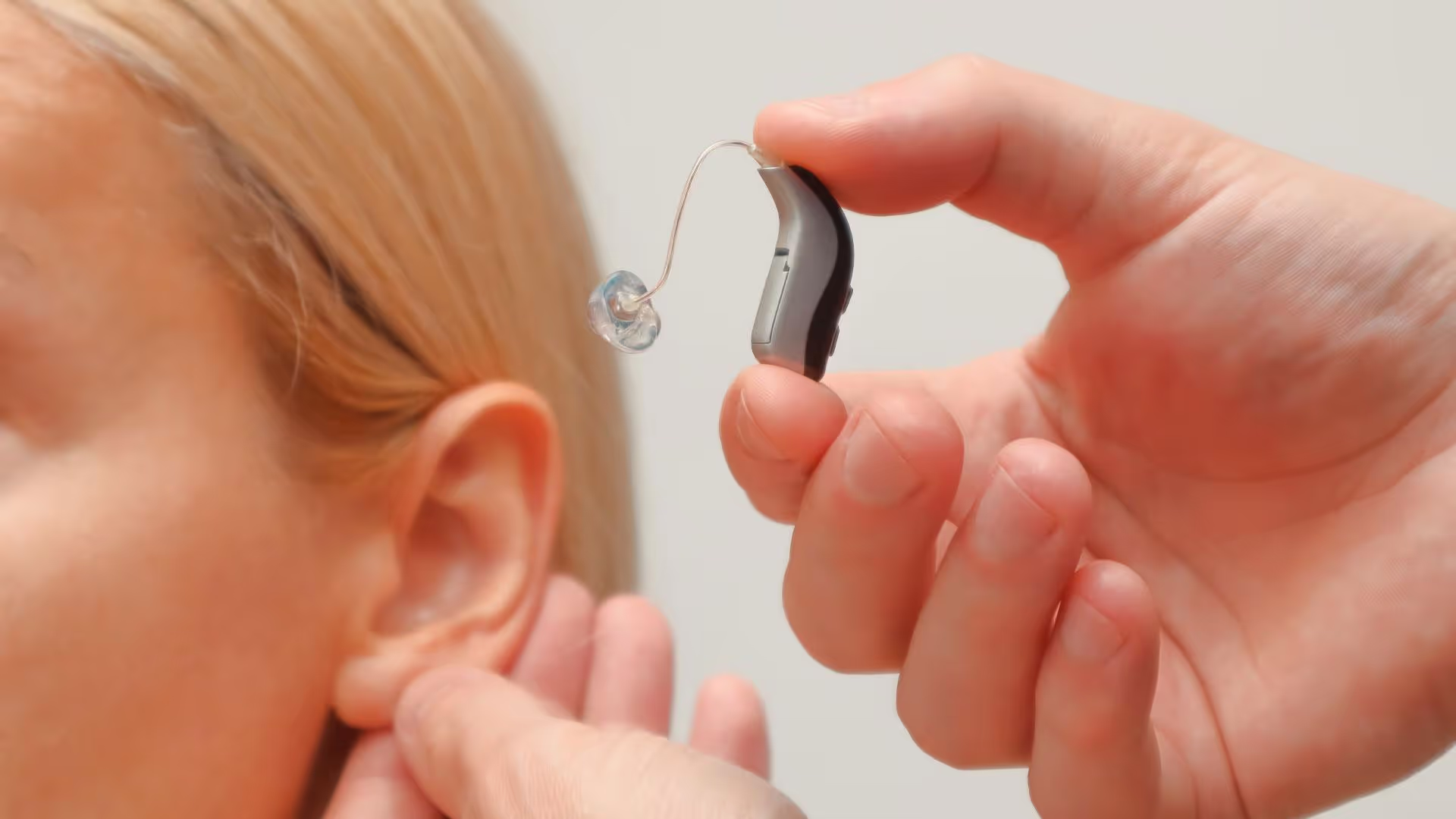
Hearing loss affects millions of Americans across all age groups, yet many people delay seeking help for years after first noticing changes in their hearing. Whether you've been struggling to follow conversations in noisy restaurants or family members have commented on your TV volume, you might be wondering if hearing aids could improve your quality of life. This decision is personal and significant—after all, it involves both your health and your daily interactions with the world around you.
Signs You Might Need Hearing Aids
Hearing loss typically develops gradually, making it easy to overlook or adapt to without realizing how much you're missing. Consider whether you've experienced any of these common indicators:
- You frequently ask people to repeat themselves or feel others are mumbling when they speak
- Phone conversations have become challenging because you can't rely on visual cues
- You struggle to follow conversations in group settings or noisy environments
- Family members comment about the television or music volume being too loud
- You find yourself withdrawing from social situations because keeping up with conversations is exhausting
These signs don't automatically mean you need hearing aids, but they certainly warrant a professional evaluation. Hearing loss that affects your daily communication and quality of life deserves attention, regardless of your age or overall health.
Understanding Your Hearing Health
The first step in determining if hearing aids are right for you is getting a comprehensive hearing assessment from a qualified audiologist or hearing healthcare professional. During this evaluation, you'll undergo several tests to determine the type of hearing loss you have (conductive, sensorineural, or mixed), the degree of hearing loss (mild, moderate, severe, or profound), whether one or both ears are affected, and your ability to understand speech, particularly in noisy environments.
Your hearing professional will explain your audiogram—a graph showing which sounds and pitches you can hear at various volumes. This detailed information helps determine whether hearing aids would benefit you and which types might work best for your specific situation.
Types of Hearing Loss and Suitable Solutions
The appropriate hearing solution depends largely on the type and degree of hearing loss. Mild to moderate hearing loss often respond well to less visible options like in-the-canal (ITC) or completely in-the-canal (CIC) devices. These discreet options work well for many professional and social situations.
Moderate to severe hearing loss may require more powerful behind-the-ear (BTE) or receiver-in-canal (RIC) models, which offer more features and amplification capabilities. Single-sided hearing loss might benefit from specialized CROS or BiCROS systems that transmit sound from your poorer-hearing side to your better-hearing ear.
Age-related hearing loss typically affects high frequencies first, making it difficult to distinguish consonant sounds that give speech clarity. Open-fit BTE hearing aids can be particularly effective for this pattern of hearing loss.
Your hearing professional will recommend options based on your audiogram, factors like ear anatomy, manual dexterity, and personal preferences.
Lifestyle Considerations
Your daily activities significantly influence which hearing solution will serve you best. Consider how the following aspects of your lifestyle might impact your hearing aid needs:
- Work environment plays a crucial role in your selection. Do you spend time in noisy settings, quiet offices, or video conferences? Different environments may require specific features like directional microphones or Bluetooth connectivity.
- Social activities should also factor into your decision. If you frequently attend group gatherings, restaurants, or cultural events, you'll benefit from hearing aids with advanced noise reduction and speech enhancement features.
- Physical activity levels determine durability needs. Active individuals need moisture-resistant devices that stay securely in place during movement.
- Technology use can enhance your hearing experience. Smartphone users might prefer hearing aids with Bluetooth connectivity and companion apps for easy adjustments and streaming capabilities.
Dr. Leeman considers these factors when recommending hearing solutions, ensuring that your devices enhance rather than hinder your preferred lifestyle.
Breaking Down the Benefits
Hearing aids offer far more than just amplified sound. Modern devices provide numerous benefits that can transform your daily experience. Improved communication reduces the frustration and misunderstandings that can strain relationships with family, friends, and colleagues. Enhanced awareness of your surroundings—from birds singing to approaching vehicles—keeps you more connected to your environment and potentially safer in certain situations.
Reduced listening effort means you'll have more energy for engaging in conversations rather than struggling to hear what's being said. Better cognitive health may result from keeping your brain actively processing varied auditory information, which some research suggests may help slow cognitive decline. Increased independence and confidence often follow as you navigate social situations more comfortably without relying on others to repeat or clarify information.
For many people, these quality-of-life improvements far outweigh any initial hesitation about wearing hearing devices.
Common Concerns and Myths
If you're hesitant about pursuing hearing aids, you're not alone. Many people share these common concerns:
- "Hearing aids will make me look old." Today's hearing devices are smaller and more discreet than ever. Many models sit completely inside the ear canal or hide behind the ear, with only a thin, nearly invisible wire entering the ear.
- "They're too expensive." While quality hearing aids represent a significant investment, financing options, insurance coverage, and more basic models can make them more accessible. Consider the value they bring to your daily life and relationships.
- "I'll just turn up the volume until I can get by." Unfortunately, simply amplifying sound doesn't address the clarity issues that characterize most types of hearing loss. Just as a louder radio doesn't improve a poor signal, volume alone doesn't solve hearing difficulties.
A professional consultation can address these concerns with personalized information rather than general assumptions.
The Consultation Process
The best way to determine if hearing aids are right for you is through a thorough consultation with a hearing healthcare provider like Dr. Leeman. During this appointment, come prepared with questions about your specific hearing concerns and how they affect your daily life. Bring a family member or friend who can provide additional perspective on your hearing challenges and help you remember important information.
Discuss what you value most in your communication needs—whether it's hearing soft-spoken grandchildren, enjoying music, or performing well in professional settings. Ask about trial periods that allow you to experience hearing aids in your everyday environments before making a final decision.
Remember that the relationship with your hearing professional continues beyond the initial fitting. Follow-up appointments and adjustments are essential parts of the process as you adapt to improved hearing.
Taking the Next Step
If you've noticed changes in your hearing that affect your quality of life, taking action is important. Hearing aids might be right for you if you've had a professional hearing evaluation confirming hearing loss that could benefit from amplification. They're worth considering when your hearing difficulties are causing frustration, fatigue, or social withdrawal.
At Dr. Leeman's practice in Austin, we understand that considering hearing aids is a significant decision. That's why we offer comprehensive evaluations, personalized recommendations, and risk-free 30-day trial periods that allow you to experience the benefits in your everyday environments. Contact our Austin office today to schedule your consultation with Dr. Leeman and take the first step toward better hearing and a more connected life.

7 Signs You Might Be a Candidate for Balloon Sinuplasty
7 Signs You Might Be a Candidate for Balloon Sinuplasty
How to Know If I Need a Hearing Aid