



Hearing Aid Options
Modern Hearing Aid Solutions for Your Lifestyle

Hearing Aid Options
Your hearing is as unique as your fingerprint. The cause, type, and degree of hearing loss varies from person to person, and everyone's ear anatomy is different. Thankfully, modern technology has made remarkable strides in creating hearing aids that address specific needs while remaining discreet. At our Austin practice, Dr. Leeman offers hearing aids that are nearly invisible yet packed with powerful features to enhance your quality of life.

Types of Hearing Aids
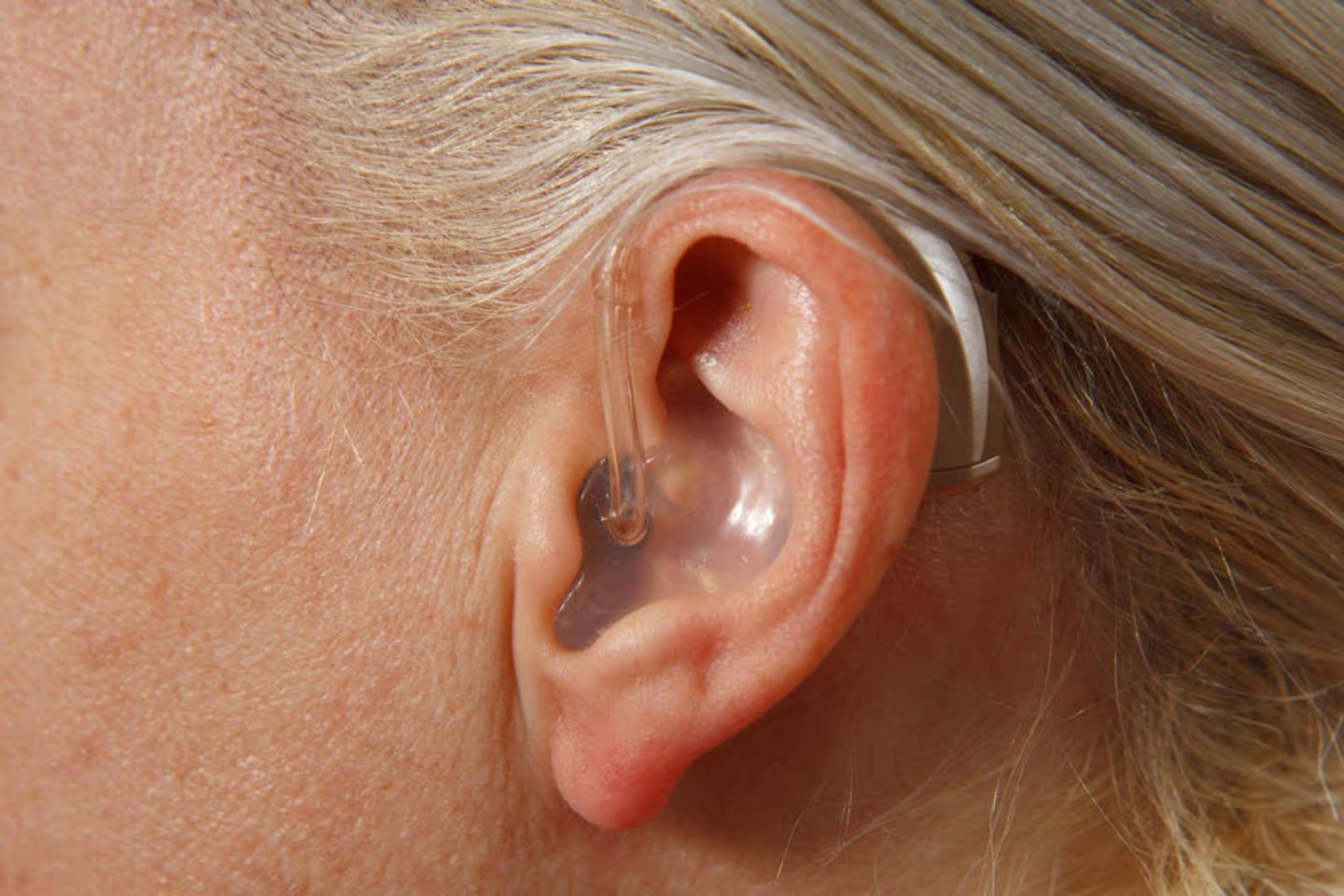
Behind-the-ear (BTE) hearing aid
What Are They?
Behind-the-ear hearing aids house all electronic components in a small case that sits comfortably behind the ear. A flexible tube connects the device to a custom-made earpiece placed in the ear canal.
Who Are They Best For?
BTE hearing aids work well for people of all ages with mild to profound hearing loss. They're particularly suitable for children because they're durable, adjustable as the child grows, and easy for parents to handle and clean.
Audio Quality and Features
These devices offer superior sound quality and typically provide the most circuit options and capabilities. With greater power than other styles, BTEs deliver crisp, clear sound even for severe hearing loss.
Cost Considerations
BTE models generally fall in the mid-range of hearing aid prices. Their durability often means fewer repairs, potentially saving money over time.

Open fit behind-the-ear (BTE) hearing aid
What Are They?
Similar to traditional BTEs, these hearing aids feature a case behind the ear with a thin, clear tube running into the ear canal. A small silicone dome or custom mold tip holds the tube in place within the canal.
Who Are They Best For?
Open-fit BTEs are ideal for adults with mild to moderate high-frequency hearing loss who still have good low-frequency hearing. They're especially popular among first-time hearing aid users who want something lightweight and comfortable.
Audio Quality and Features
These devices allow natural low-frequency sounds to enter the ear while amplifying high-frequency sounds. This creates a more natural hearing experience and reduces the sensation of your voice sounding too loud or echo-like.
Cost Considerations
Open-fit BTEs tend to be moderately priced, offering good value for their performance and comfort benefits.
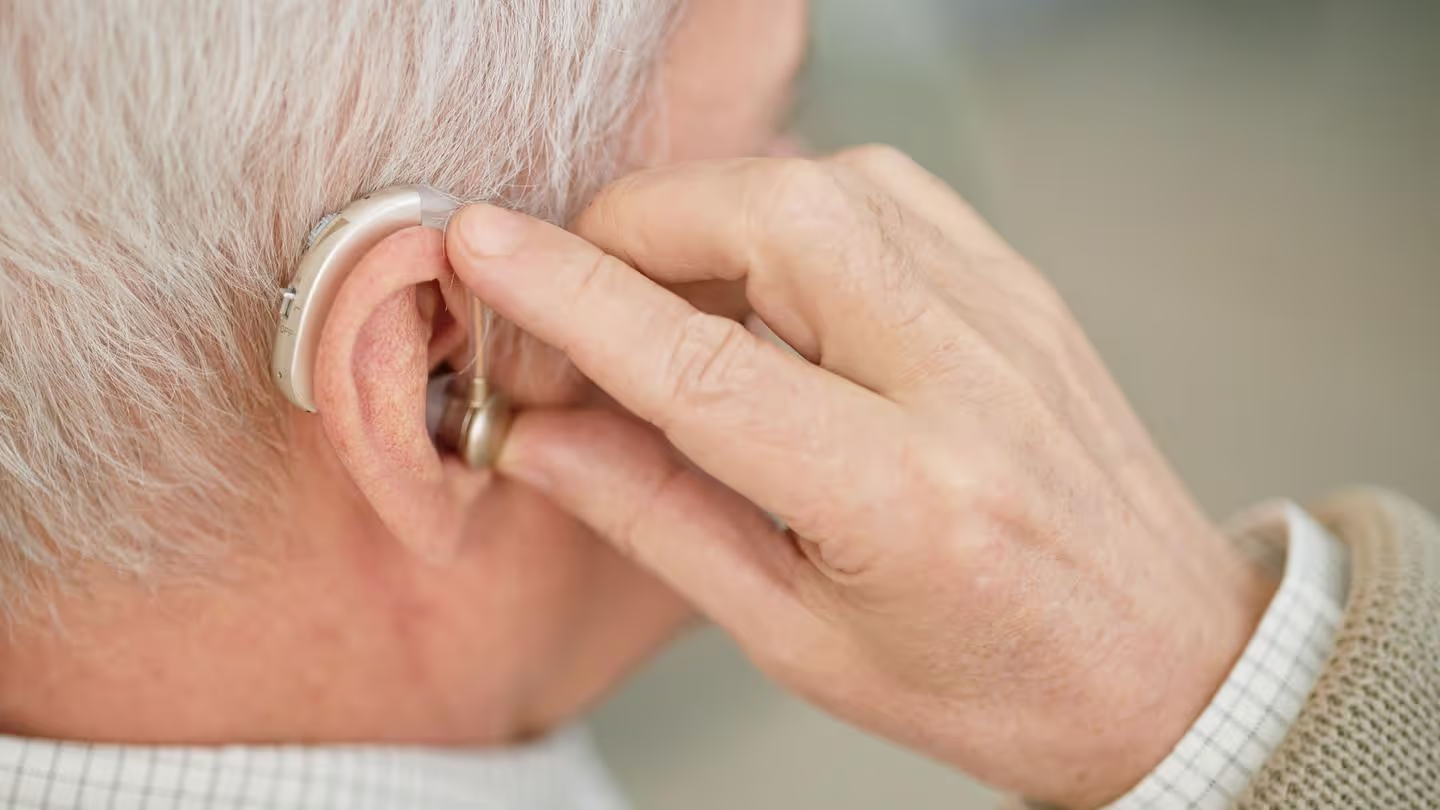
CROS/BiCROS hearing aid
What Are They?
CROS (Contralateral Routing of Signals) and BiCROS (Bilateral Contralateral Routing of Signals) hearing aids are specialized devices for people with hearing loss in only one ear. They use a microphone on the device in the non-hearing ear to transmit sound to the functional ear.
Who Are They Best For?
These hearing aids are exclusively designed for individuals with single-sided deafness or significant hearing loss in one ear while the other ear has normal or near-normal hearing (CROS) or some degree of hearing loss (BiCROS).
Audio Quality and Features
By transmitting sound from your poorer-hearing side to your better-hearing ear, these devices restore the sense of hearing from both sides, improving your ability to locate sounds and understand speech in noisy environments.
Cost Considerations
CROS/BiCROS systems are typically more expensive than standard hearing aids since they require two devices working together.
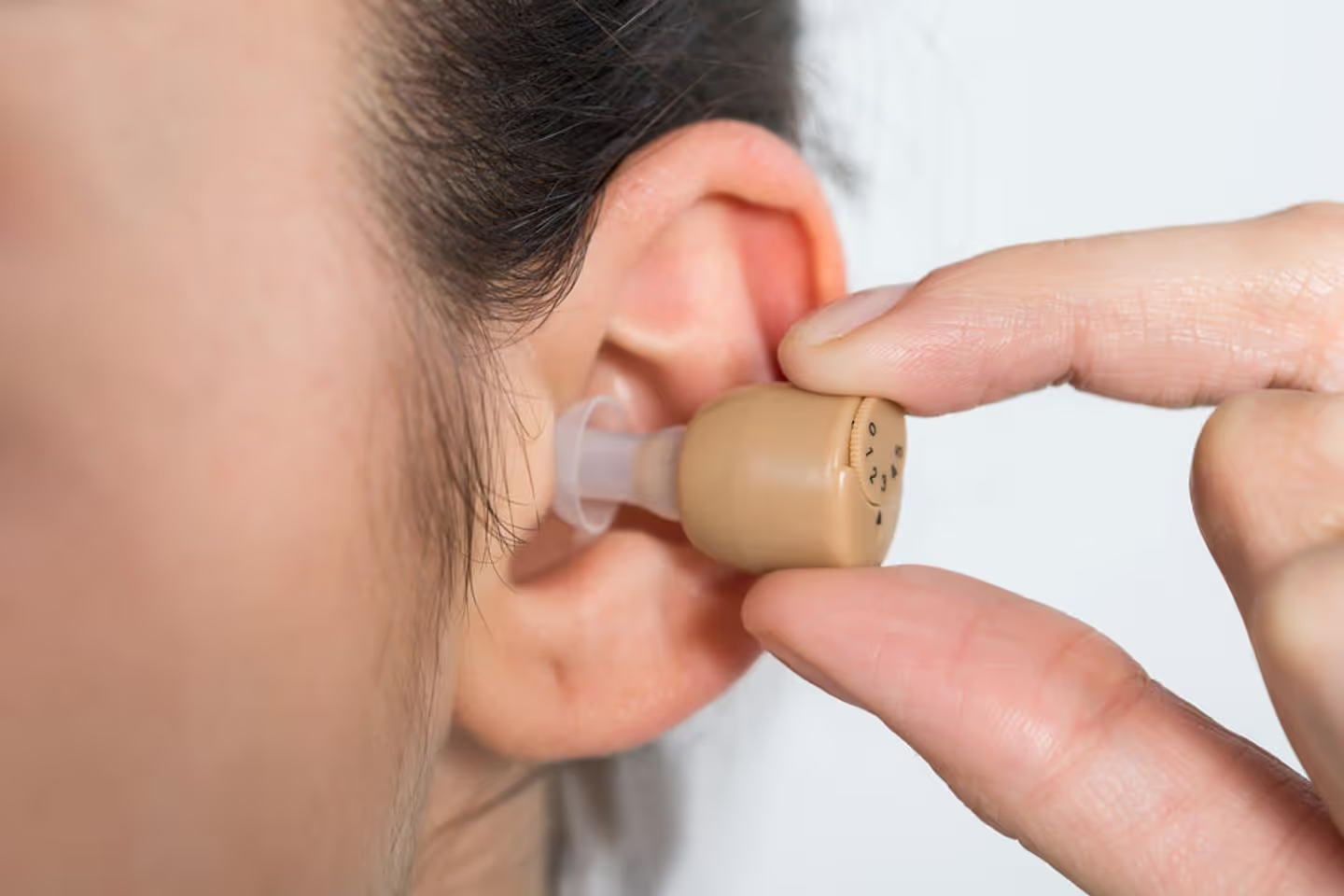
In-the-ear (ITE) hearing aid
What Are They?
ITE hearing aids contain all components within a custom-made, skin-toned shell that fills the outer portion of your ear. Their slightly larger size compared to smaller in-ear options makes them easier to handle.
Who Are They Best For?
These hearing aids work well for individuals with mild to severe hearing loss who want a balance between visibility, features, and ease of handling. They're often chosen by people who have dexterity challenges but still want a relatively discreet option.
Audio Quality and Features
ITE hearing aids can accommodate various technological features, including directional microphones, volume control buttons, and wireless connectivity. Their slightly larger size allows for longer battery life and more power.
Cost Considerations
ITE devices typically fall in the middle of the price spectrum, offering a good compromise between feature availability and cost.

In-the-canal (ITC) and completely-in-the-canal (CIC) hearing aids
What Are They?
These small hearing aids fit partially (ITC) or completely (CIC) inside your ear canal. Custom-made for your unique ear anatomy, they're the smallest and most discreet hearing aids available.
Who Are They Best For?
ITC and CIC hearing aids work best for adults with mild to moderate hearing loss who prioritize cosmetic concerns. They're ideal for active professionals who want an invisible solution.
Audio Quality and Features
Despite their small size, these devices deliver excellent sound quality. They work with the natural acoustics of your ear and may cause less wind noise during outdoor activities. However, their small size means fewer features and controls.
Cost Considerations
The sophisticated technology required to miniaturize these devices often makes them more expensive than larger options. Additionally, smaller components may require more frequent maintenance.

Receiver-in-canal (RIC) hearing aid
What Are They?
RIC hearing aids are similar to BTE models but with a key difference: the speaker sits inside the ear canal, connected to the behind-the-ear portion by a thin electrical wire rather than an acoustic tube.
Who Are They Best For?
These hearing aids are suitable for people with mild to severe hearing loss. Their popularity stems from their versatility, discreet appearance, and comfort. They're particularly good for active adults who want powerful technology in a nearly invisible package.
Audio Quality and Features
RIC hearing aids deliver excellent sound quality with reduced distortion. Many models offer advanced features like Bluetooth connectivity, rechargeable batteries, and smartphone app control. Their design separates the microphone and speaker, reducing feedback issues.
Cost Considerations
While RIC hearing aids tend to be in the moderate to high price range, their popularity has helped bring their cost down in recent years. Many users find the combination of performance and discretion worth the investment.
Comfort and Wearability
Comfort is a crucial factor in hearing aid satisfaction. Even the most technologically advanced hearing aid won't help if it's uncomfortable to wear. Here are some considerations regarding comfort.
Adaptation Period
Physical Fit
Ventilation
Daily Wear Duration
Matching Hearing Aids to Your Lifestyle
Finding the right hearing aid involves considering not just your hearing loss, but also your lifestyle and personal preferences.
For Active Lifestyles
For Technology Enthusiasts
For Social Settings
For Budget-Conscious Individuals
Which Hearing Aid is Perfect for You?
The best way to determine your ideal hearing aid is through a professional consultation. Dr. Leeman's extensive experience and state-of-the-art diagnostic equipment ensure you'll receive personalized recommendations based on your specific hearing loss, lifestyle needs, and budget considerations.
We understand that getting hearing aids is an important investment in your quality of life. That's why we work closely with you to find the perfect solution. Whether you need basic amplification or the latest speech processing technology with Bluetooth connectivity, we'll ensure you're satisfied with your new hearing device.
Book a consultation today!
All of our hearing aids come with a risk-free 30-day trial period, allowing you to experience the benefits in your everyday environments. Contact our Austin office today to schedule your consultation with Dr. Leeman and take the first step toward better hearing.

Stay Connected